 Reviews
Free Shipping on All Orders | Save 10% with code SAVE10
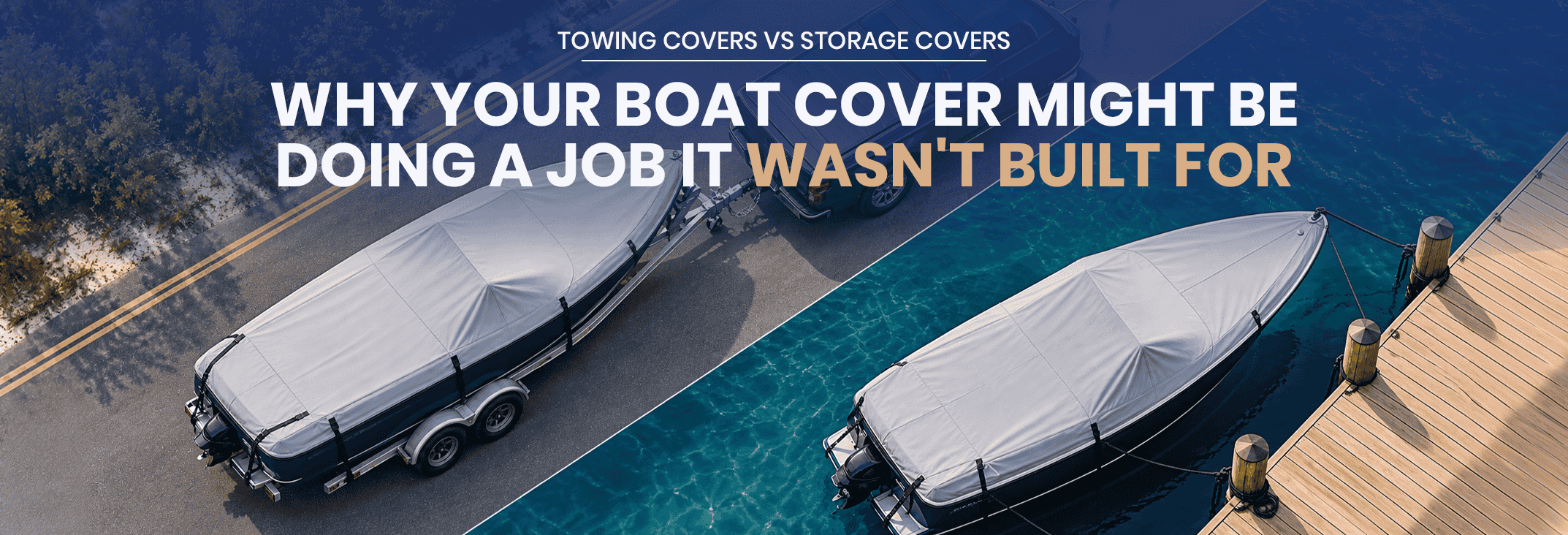
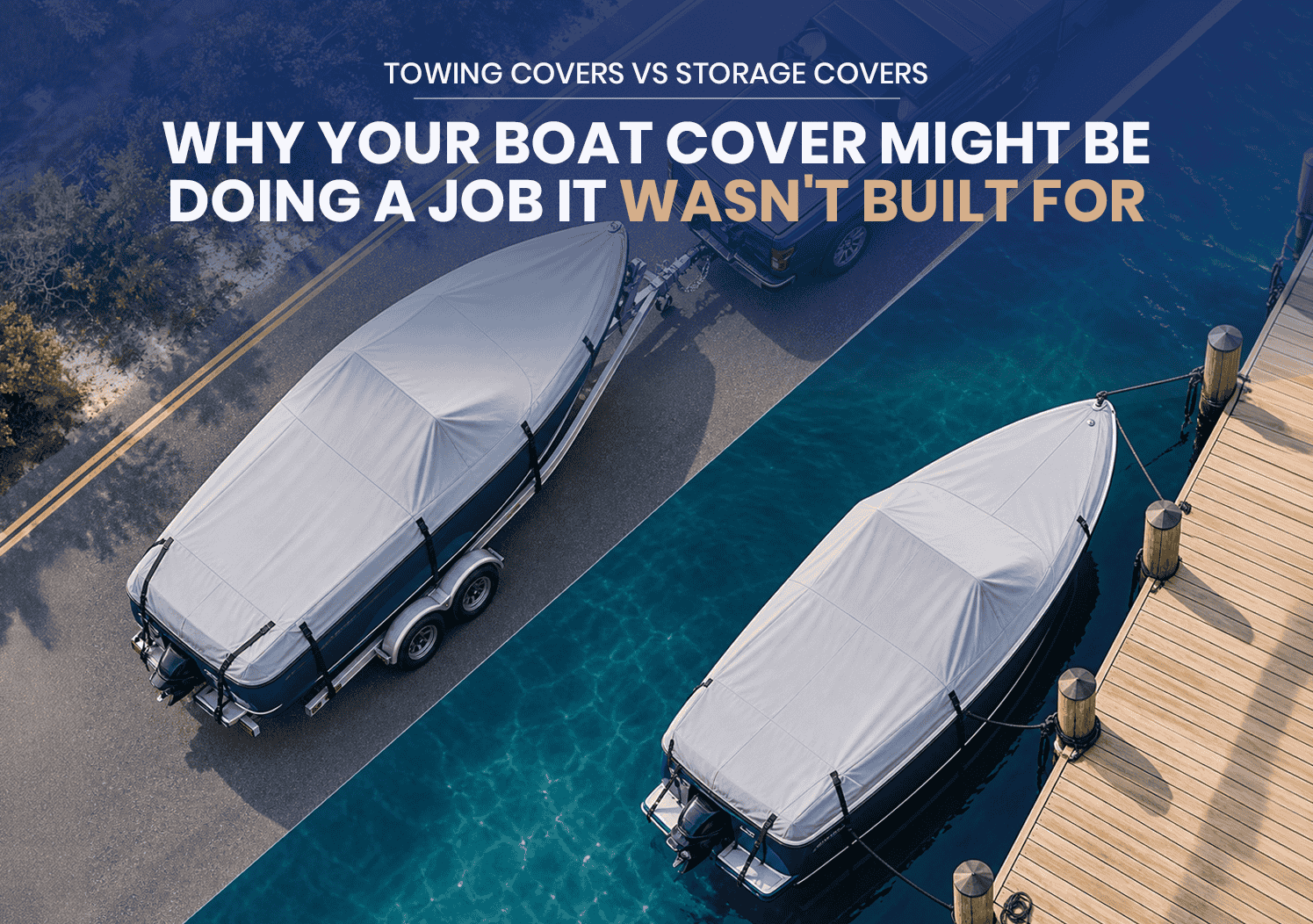
Towing Covers vs. Storage Covers: Why Your Boat Cover Might Be Doing a Job It Wasn't Built For
September 18, 2026
Here's a mistake that's easy to make and expensive to learn from: using the same cover for towing your boat down the highway that you use for storing it in your driveway all winter. They look like the same product, and technically they can overlap — but the forces a cover deals with at 65 miles per hour are nothing like the forces it deals with sitting still on a trailer in the backyard. Treating them as interchangeable is how a lot of covers end up shredded on the side of the highway.
Why Towing Is a Completely Different Stress Test
A parked boat cover deals with wind gusts, rain, and UV exposure — all real stressors, but all relatively gradual. A cover on a boat being towed at highway speed deals with sustained, forceful wind pressure the entire time the vehicle is moving, plus turbulence from other vehicles, direction changes, and vibration from the road itself.
That sustained pressure is a different category of stress than storage wind exposure, and it exposes weaknesses that might never show up in a driveway:
- Loose spots that only flap gently in a storage setting can flog violently at highway speed, and that repeated whipping motion tears fabric and stresses seams far faster than static wind ever would.
- Straps rated for holding a cover in place while parked may not be rated for the sustained tension of highway wind pressure.
- A cover with slack anywhere — around the bow, over a T-top, along the sides — becomes a liability once air is moving past it at speed instead of just settling on it.
What a Real Towing Cover Needs
If a cover is going to spend real time on the road, not just protecting a boat that's parked, it needs a few things a storage-only cover might not prioritize:
- A snugger, more tensioned fit overall, since any looseness becomes amplified at speed rather than just cosmetically loose
- Reinforced strap systems, often including under-hull straps in addition to standard perimeter tie-downs, to prevent lift at the bow or stern
- Aerodynamic consideration for tall features like T-tops or towers, where wind resistance is significantly higher than over a flat hull
- Manufacturer confirmation that the cover is actually rated for towing, not just storage — this is worth checking directly rather than assuming, since not every cover is built or tested for both uses
What a Storage Cover Prioritizes Instead
Storage covers are optimized for a different set of problems — problems that unfold over weeks and months rather than a few hours on the highway:
- UV resistance for prolonged sun exposure, especially outdoor storage without shade
- Breathability to prevent moisture buildup and mildew during long stretches without the boat being uncovered
- Water resistance over extended exposure, since a storage cover needs to shed rain and snow repeatedly over an entire season, not just survive a single trip
A cover built primarily for these long-term concerns isn't necessarily built for the different, more acute stress of sustained highway wind.
Can One Cover Do Both?
Some covers are genuinely built to handle both towing and storage, but that's a spec worth confirming rather than assuming. If a cover doesn't explicitly mention towing use, treat that as a sign it was designed and tested primarily for stationary protection — using it at highway speed anyway is a gamble with the cover's lifespan, and potentially with other drivers if fabric or straps come loose on the road.
A Simple Way to Think About It
If your boat only gets covered while sitting in a driveway, marina slip, or storage yard, a dedicated storage cover is the right call — no need to pay for towing-rated reinforcement you'll never use. If your boat regularly gets trailered to a lake, a ramp, or between seasonal storage locations, it's worth specifically looking for (or asking about) a cover rated for towing use, rather than assuming your storage cover will hold up the same way at 65 mph that it does parked in the yard.
Bottom Line
A boat cover sitting still and a boat cover being towed down the highway are dealing with two very different challenges, even though it's technically the same piece of fabric doing the job. Matching the cover to how it's actually going to be used — not just the boat it's going on — is what keeps it intact through both jobs instead of failing at the one it was never built for.
FAQs
At Boat Covers Now, we offer a wide range of boat covers to suit different types of boats, including Pontoon Boat Covers, V Hull Boat Covers, T-Top Full Covers, Central Console Boat Covers, 16FT-18FT covers, 14x16FT-90in covers, and 22FT-24FT Pontoon covers. Each cover is designed to provide optimal protection and enhance the durability and appearance of your boat.
Choosing the right boat cover involves assessing your needs, considering where and how you'll store your boat, and thinking about your local weather conditions. It’s essential to choose the right material that matches your storage environment and climate. We also offer custom-fit options to ensure the cover fits your boat perfectly, providing features like reinforced seams and secure straps. Contact us at sales@boatcoversnow.com so we can assist you.
Our boat covers are made from high-quality materials, including cotton, linen, polyester, and rayon blends. Each material is selected for its specific advantages, such as durability, waterproofing, breathability, and UV resistance, to provide unmatched longevity and protection for your boat.
To ensure the longevity and effectiveness of your boat cover, regular cleaning with mild soap and water is recommended. Store your cover in a dry, well-ventilated area when not in use, and inspect it regularly for any signs of wear or damage. Avoid sharp objects that can puncture the material and follow the manufacturer’s instructions for specific care guidelines.
Yes, we offer custom boat covers tailored to fit your boat’s exact specifications. Whether you have a luxury yacht or a small fishing vessel, we have the expertise to craft a cover that not only fits securely but also enhances the appearance and functionality of your boat.
At Boat Covers Now, quality is at the core of what we do. Our skilled craftsmen use a blend of conventional artistry and contemporary methods to create boat covers that meet the highest standards of functionality and durability. We are also committed to environmental responsibility, using sustainable materials and ethical production practices. Our dedication to customer satisfaction ensures a seamless purchasing experience and reliable customer support.
Placing an order with Boat Covers Now is easy through our user-friendly website. Simply select the type and size of the cover you need, and proceed to checkout. We offer various shipping options to meet your needs, and our customer support team is available to assist you with any questions throughout the process. Contact us at sales@boatcoversnow.com and we’ll be happy to help!
If you encounter any issues with your boat cover, such as damage or improper fit, please contact our customer support team at sales@boatcoversnow.com immediately. We are dedicated to ensuring your satisfaction and will work with you to resolve any problems, including repairs, replacements, or adjustments to ensure the cover fits your boat perfectly. For more information, you can also visit our Returns/Refund Policy Page.